Rodriguez
1938–1948
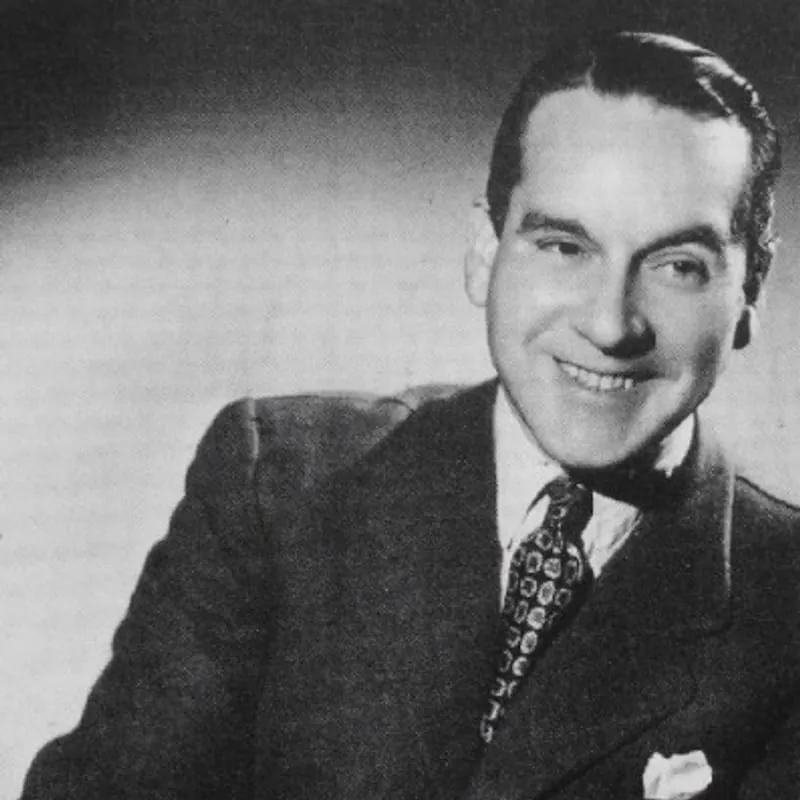
Enrique Rodríguez
Enrique Rodríguez (1901–1971) was born in Buenos Aires and began his musical career as a violinist and pianist, working in various tango ensembles during the 1930s before forming his own orchestra in 1937. He began recording for the Odeon label the following year, and by 1940 had found his definitive sound and voice — literally, with the arrival of singer Armando Moreno, who would become the orchestra's signature vocalist and form one of the most prolific singer-orchestra partnerships of the Golden Age.
Rodríguez's orchestral style is bright, simple, and unabashedly popular — designed to please, to entertain, and to fill dance floors without intellectual pretense. Where Troilo was sophisticated and Pugliese was dramatic, Rodríguez was cheerful and direct, with clean, singable melodies, buoyant tempos, and a light, swinging rhythm that invites movement. His arrangements have a distinctly populist quality — the tunes are catchy, the harmonies uncomplicated, the emotional register sunny and optimistic. The vals recordings are particularly joyful, with a bright, spinning energy, and the overall sound has an almost festive character that sets it apart from the darker, more introspective orchestras of the era. This is tango as celebration — warm, unpretentious, and irresistibly danceable.
Rodríguez's recording career concentrated in the decade from 1938 to 1947 — compact but remarkably productive. The earliest recordings featured Roberto Flores, whose brief tenure in the late 1930s nonetheless produced enduring classics, including his sparkling version of the vals "Salud, Dinero y Amor" — one of the most beloved waltzes in the entire tango repertoire. The arrival of Armando Moreno in 1940 defined the orchestra's identity for the remainder of its career. Moreno's voice — smooth, charming, and perfectly matched to the orchestra's bright, popular style — graced the vast majority of recordings and produced an extraordinary string of dance-floor favorites: "En la Buena y en la Mala," "Danza Maligna," "Llorar por una Mujer," "Como Has Cambiado Pebeta," "Suerte Loca," and "Tú... El Cielo Y Tú." The instrumentals, including "La Torcacita" and "El Morochito," are equally spirited and rhythmically engaging.
At milongas today, Rodríguez is a crowd-pleasing staple that DJs deploy when they want the floor smiling and moving. His tandas bring lightness and joy — particularly effective in the earlier or more social portions of an evening, or as a warm, upbeat palate cleanser between heavier orchestras. The vals recordings are standouts: "Salud, Dinero y Amor" and "Fru Fru" are among the most popular waltz choices worldwide. Moreno's vocal tangos are reliable floor-fillers whose catchy melodies and cheerful energy make them accessible to all levels — beginners find the rhythm easy to follow, while experienced dancers enjoy the buoyant musicality. Rodríguez may lack the depth of Troilo or the drama of Pugliese, but his gift for simple, heartfelt, danceable music ensures he remains a valued and frequently programmed orchestra at milongas everywhere.
Top songs
- Danza Maligna
- En la Buena y en la Mala
- Como Has Cambiado Pebeta
- Tú... El Cielo Y Tú
- Son Cosas del Bandoneón