Maderna
1949–1958
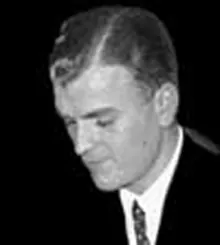
Osmar Maderna
Osmar Maderna (1918–1951) was a pianist, composer, and arranger whose tragically short career left a brilliant mark on tango. His real name was Osmar Héctor Maderna, and he was born in Pehuajó, a rural town in the province of Buenos Aires. A precocious musician, he was leading his first orchestra, Vitaphone, by the age of thirteen. In 1938, he moved to Buenos Aires and, after a brief stint with another group, joined Miguel Caló's celebrated "Orquesta de las Estrellas" in 1939, replacing pianist Héctor Stamponi. It was here that Maderna honed his style and became a principal architect of the Caló sound before leaving to form his own orchestra in 1945. His life was cut short in a flying accident in 1951, a passion that rivaled his love for music.
Often called "The Chopin of Tango," Maderna's sound is defined by the piano. His playing was subtle, lyrical, and romantic, avoiding percussive force in favor of a light, almost ethereal touch. This sensibility shaped his entire orchestra, which continued the elegant, dancer-focused style he had helped develop with Caló, but with the piano even more central. The arrangements feature clean, transparent lines and create space for beautiful, alternating solos between the piano, bandoneón, and violin. The sound is rhythmic and perfect for dancing, but it contrasts with the driving force of an orchestra like Juan D'Arienzo's, offering a more nuanced and melodic interpretation of the beat.
While Maderna's orchestra recorded with several notable vocalists, including Orlando Berry, Luis Tolosa, and Pedro Dátila, the selections in this library are all instrumental. This gives a perfect opportunity to focus on the leader's own virtuosity and his orchestral vision. The recordings here showcase his sophisticated, almost symphonic approach to tango. Pieces like the dreamy "Lluvia de Estrellas" and the aptly named "Concierto en la Luna" are prime examples of his creative ambition, blending rich arrangements with his own dazzling performance. Even on a classic like "La Cumparsita," his unique pianistic signature is unmistakable. The latest recording in this collection, "Merceditas," was recorded posthumously in 1958 by the Orquesta Símbolo Osmar Maderna, led by his friend and violinist Aquiles Roggero to keep his style alive.
At milongas today, a Maderna tanda is a call to elegant, salon-style dancing. His music has a flowing, romantic quality that encourages a smooth, connected walk and intricate figures. It’s a wonderful choice for the heart of the evening, when dancers are warmed up and ready for something musically rich but still clearly grounded in the rhythm. DJs often turn to instrumentals like "Lluvia de Estrellas" or the powerful "Concierto en la Luna" to create a moment of pure, sophisticated musicality on the dance floor.
Top songs
- Merceditas
- Ahí Va el Dulce
- Aromas
- Lluvia de Estrellas
- Concierto en la Luna