Biagi
1938–1962
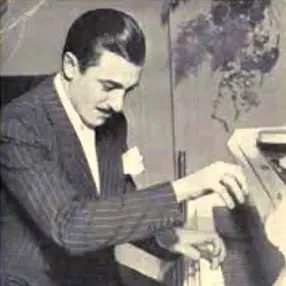
Rodolfo Biagi
Rodolfo Biagi (1906–1969), known as "Manos Brujas" (Witch's Hands) for his extraordinary piano technique, was born in Buenos Aires and studied at the National Conservatory before playing in several orchestras during the early 1930s. His career-defining moment came in 1935 when he joined Juan D'Arienzo's orchestra as pianist — his percussive, staccato piano style became the catalyst for D'Arienzo's rhythmic revolution and helped ignite the resurgence of tango dancing. In 1938, Biagi left to form his own orchestra, debuting at the Café El Nacional, taking his distinctive piano sound and building an entire ensemble around it.
Biagi's sound is unmistakable — built around his own percussive, nervous piano that attacks the rhythm with an almost manic brilliance. Where D'Arienzo channeled Biagi's style into a full-orchestra rhythmic machine, Biagi as a leader gave his piano even greater prominence, with the ensemble often dropping away to let his staccato runs and sudden accents take center stage. The effect is thrilling and slightly unpredictable: playful rhythmic surprises, sudden dynamic shifts, and a bright, sparkling quality unlike any other orchestra. His tangos crackle with nervous energy; his valses are dizzyingly fast and exhilarating; his milongas are pure rhythmic joy. The overall character is lighter and more mischievous than D'Arienzo's — where D'Arienzo commands, Biagi teases.
His career as a leader spanned from 1938 to the early 1960s. The earliest recordings with singer Teófilo Ibáñez established the orchestra's identity immediately — crisp vocal delivery matching the young ensemble's punch on gems like "Lejos de Ti" and "Campo afuera." Andrés Falgás continued the energetic early sound, followed by the longest and most celebrated vocal partnership with Jorge Ortiz in the early-to-mid 1940s, producing standouts like "Quiero Verte una Vez Más" and "Carillón de la Merced." Alberto Amor and Carlos Acuña brought different vocal colors during the mid-1940s, while Hugo Duval carried the later period into the 1950s. The instrumentals — from early masterpieces like "El 13" and "Pura Clase" to late gems like "Racing Club" — showcase Biagi's piano most prominently and include some of the most distinctive pieces in all of tango.
At milongas, Biagi tandas are high-energy, joyful moments that demand and reward rhythmic precision. The playful accents and unexpected pauses create irresistible opportunities for musical play, and his music invariably brings smiles to the dance floor. DJs typically program Biagi in the more energetic portions of the evening, often as a sparkling alternative to D'Arienzo. Instrumentals like "El 13," "Pura Clase," "Racing Club," and "A la Gran Muñeca" are dancefloor classics, while "Lágrimas y Sonrisas" and "Quejas de Bandoneón" showcase the full range of his artistry. Biagi is particularly loved by dancers who enjoy rhythmic play and sharp musical accents — his music turns every dance into a game.
Top songs
- Racing Club
- Carillón de la Merced
- El 13
- Nada
- Caricias