OTV
1926–1944
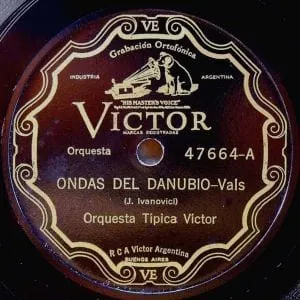
Orquesta Típica Victor
Orquesta Típica Victor (founded 1925) was not a single leader's ensemble but the house orchestra of the RCA Victor recording company — Argentina's dominant record label during tango's formative decades. The orchestra was created as a studio recording project to capitalize on the surging popularity of tango, assembling top-tier musicians under rotating musical directors including Adolfo Carabelli and others. This institutional rather than personal origin gave the orchestra a unique character: it had no single artistic visionary shaping its identity, but benefited from RCA Victor's ability to hire the finest available players and provide access to the best recording technology of the era.
The Típica Victor sound is clean, polished, and distinctly early-era — reflecting its origins in the late 1920s and early 1930s when tango arrangements were leaner and more rhythmically direct than the lush orchestrations of the Golden Age's peak. The predominantly instrumental repertoire gives the orchestra a pure, ensemble-driven character, with tight interplay between bandoneóns and strings and a rhythmic clarity that harks back to the Guardia Vieja tradition. The arrangements are professional and well-crafted but less personally distinctive than those of leader-driven orchestras — there is no equivalent of Di Sarli's piano pulse or Pugliese's dramatic tension. Instead, the Típica Victor offers a representative, high-quality snapshot of how tango sounded during its early recording era, with a directness and simplicity that can be refreshing amid the more complex arrangements of later orchestras.
The Típica Victor's recordings span an extraordinary range from the late 1920s through the early 1940s, with the bulk concentrated in the late 1920s and 1930s. As a primarily instrumental ensemble, vocalists appeared intermittently rather than defining eras. Alberto Gómez was the most prominent early singer in the late 1920s and early 1930s, contributing recordings like "Ventarrón" with his robust, characterful voice. Carlos Lafuente sang during the early 1930s, and the brief appearance of Ángel Vargas — later famous as D'Agostino's legendary partner — produced the beautiful vals "Sin Rumbo Fijo" and the tango "Adiós Buenos Aires." Mario Pomar contributed atmospheric recordings including "Milonga de los Fortines." But it is the instrumentals that define the Típica Victor — from early gems like "Coqueta" through dozens of clean, rhythmically precise recordings that document tango's evolution through the late 1920s and 1930s.
At milongas today, the Típica Victor serves a specific programming purpose: its early-style instrumentals offer DJs a way to introduce variety and historical depth into their sets. The clean rhythmic recordings work well as alternatives to more familiar orchestras, and their slightly old-fashioned character can provide pleasant contrast within a tanda rotation. "Coqueta" is the orchestra's most recognized piece, and "Sin Rumbo Fijo" is a genuinely beautiful vals that holds its own against any orchestra's waltz recordings. The predominantly instrumental catalogue makes the Típica Victor useful for purely musical tandas where the focus is on rhythm and ensemble playing. While not an essential orchestra for most milongas, knowledgeable DJs appreciate the Típica Victor as a tool for adding historical color and rhythmic variety, and its clean, uncomplicated style makes the recordings accessible to dancers at any level.
Top songs
- Adiós Buenos Aires
- Ventarrón
- Coqueta
- Carillón de la Merced
- Una Vez