Fresedo
1931–1947
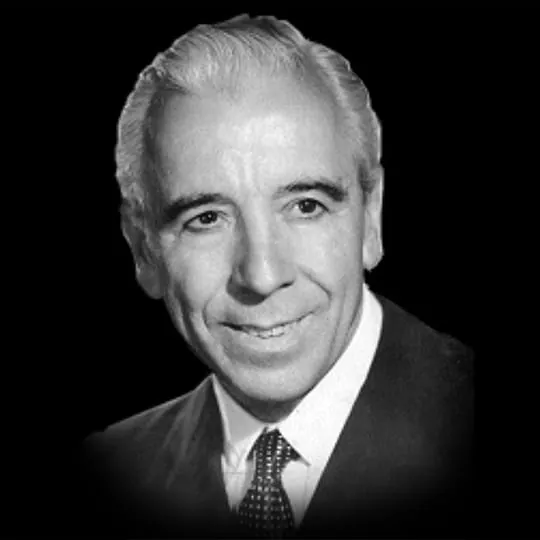
Osvaldo Fresedo
Osvaldo Fresedo (1897–1984), known as "El Pibe de La Paternal" after his Buenos Aires neighborhood, was one of the founding architects of modern tango. A bandoneónist who began performing professionally as a teenager, he traveled to the United States in 1920 — where he encountered jazz and its instrumentation — and formed his first orchestra in the early 1920s. A true pioneer, Fresedo was among the first to introduce the piano, the double bass, and even the vibraphone and harp into the tango ensemble, pushing the genre toward a more refined, cosmopolitan sound during the late 1920s and 1930s.
Fresedo's sound is the most elegant and aristocratic in tango — polished, melodically beautiful, and subtly sophisticated, with an almost European refinement that set him apart from his contemporaries. His arrangements favor smooth, flowing lines and gentle dynamics over rhythmic drive; where D'Arienzo is fire and Pugliese is thunder, Fresedo is silk. The vibraphone and harp — instruments he uniquely brought into tango — give his recordings a shimmering, almost impressionistic quality that is instantly recognizable. The tempos tend to be moderate to slow, the phrasing unhurried and graceful, and the overall mood contemplative and bittersweet. His music represents the salon tradition of tango at its most sophisticated — closer to the concert hall than the arrabal.
Fresedo's recording career is one of the longest in tango, spanning from the late 1920s through the early 1950s. Roberto Ray was the first major vocal partner, his smooth, elegant voice gracing an extraordinary run of recordings from the early 1930s through 1939 — producing enduring masterpieces like "Vida Mía" and "Araca la Cana," as well as beloved pieces like "Cordobesita," "Siempre Es Carnaval," and "El Once." Ricardo Ruiz took over the vocal duties from the late 1930s through 1941, bringing a more lyrical, tender quality heard beautifully on "Niebla del Riachuelo" and "Después del Carnaval." The instrumentals throughout the career — "Poliya," "Tigre Viejo," "Derecho Viejo" — are atmospheric and deeply musical, showcasing Fresedo's unique orchestral palette with its distinctive timbral colors.
At milongas, Fresedo occupies a particular niche: his music is programmed for the most elegant, intimate moments of the evening — a late-night tanda when the energy softens and couples draw close. His recordings are almost entirely tangos, with very few valses or milongas, which limits his programming versatility but deepens his impact when used well. "Vida Mía" is one of the most romantic tangos ever recorded, and a Fresedo tanda reliably transforms the atmosphere of a milonga. His music is best suited to dancers who appreciate subtlety and connection over rhythmic energy, and a well-placed Fresedo set can be one of the most memorable moments of an evening. His historical importance as a pioneer who helped transform tango from rough café music into a sophisticated art form cannot be overstated.
Top songs
- Después del Carnaval
- Tigre Viejo
- En la Huella del Dolor
- El Rebelde
- Cordobesita