Pugliese
1943–1969
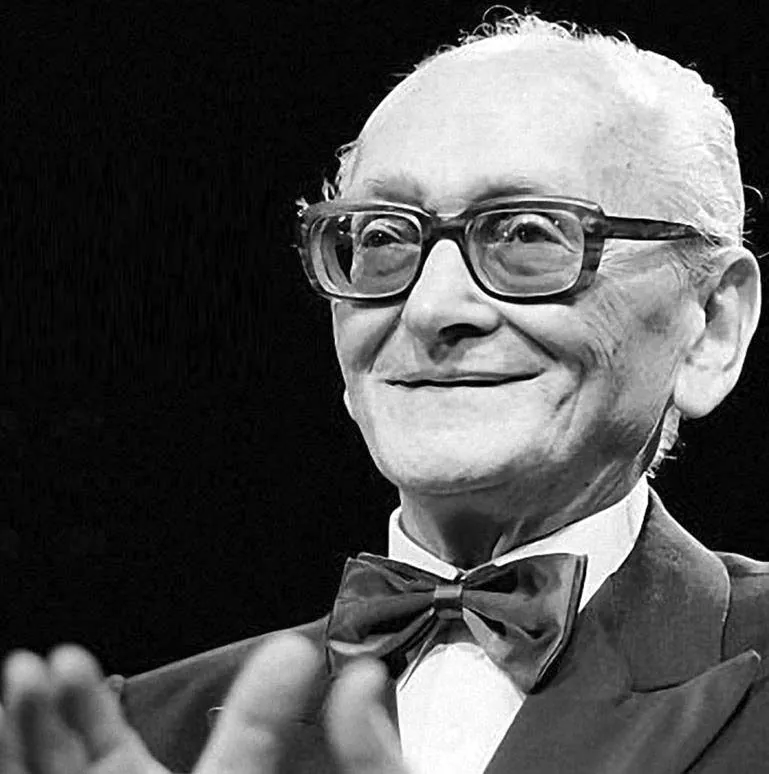
Osvaldo Pugliese
Osvaldo Pugliese (1905–1995) was born in the Villa Crespo neighborhood of Buenos Aires, one of the cradles of tango. He studied piano from a young age and was deeply influenced by the intellectual, avant-garde tango of Julio De Caro. After playing in various ensembles through the 1920s and 1930s, he formed his own orchestra in 1939, debuting at Café El Nacional. A lifelong communist, Pugliese was repeatedly imprisoned during the Perón era, but his orchestra continued performing in his absence — famously placing a red carnation on the piano in solidarity whenever he was jailed.
Pugliese's sound is the most dramatic and powerful in all of tango. His arrangements are built on tension and release — heavy, growling bass lines in the bandoneóns, sudden explosive accents (the famous "yumba" beat, named after his signature composition), passages of suspended rubato where the music seems to stop breathing, then violent rhythmic resolutions that hit like a physical force. Unlike the steady, danceable pulse of Di Sarli or D'Arienzo, Pugliese's rhythm is elastic and unpredictable, stretching and compressing time in ways that demand advanced musicality from dancers. The orchestra's tone is dark, dense, and intensely emotional — closer to a symphonic approach than any other tango ensemble.
His recording career spans from 1943 into the late 1970s — almost entirely tangos, with a striking preponderance of instrumentals that reflects Pugliese's emphasis on the orchestra as a collective voice rather than a vehicle for singers. Roberto Chanel was the first major vocalist in the early-to-mid 1940s, his passionate delivery matching the orchestra's intensity on masterpieces like "Farol," "Corrientes y Esmeralda," and "Rondando Tu Esquina." Alberto Morán became the defining vocal partner from the mid-1940s through the early 1950s — his smooth, heartfelt voice provided a lyrical counterpoint to the orchestra's drama, producing definitive recordings of "Pasional" and "Sin Palabras." Jorge Maciel carried the vocal tradition into the late 1950s and 1960s with recordings like the beloved "Y Todavía Te Quiero."
At milongas, Pugliese tandas are dramatic peaks — carefully placed by DJs at the most intense moments of the evening. His music is considered the most challenging to dance to and is best suited to experienced couples who can navigate the rubato, dramatic pauses, and explosive accents. One Pugliese tanda per milonga is standard practice, and it invariably draws the floor's most expressive dancers. "La Yumba," "Recuerdo," "Malandraca," and "Gallo Ciego" are among the most iconic instrumental tangos ever recorded. For dancers who embrace its demands, Pugliese offers the most intense and rewarding experience on the tango floor — raw, uncompromising, and profoundly moving.
Top songs
- Raza Criolla (el taita)
- N... N...
- Corrientes y Esmeralda
- Chiqué
- Esta Noche de Luna