Modern
1973–2023
Orquesta Típica Andariega
Orquesta Típica Andariega (founded 2009) is a Buenos Aires-based ensemble created and directed by Italian-born double bassist Luigi Coviello. Coviello moved to Buenos Aires after falling in love with tango, with the express purpose of forming his own orchestra. Andariega was born from his vision to create new, danceable tango music that is firmly rooted in the classic style of the 1940s while infused with the energy of the new millennium. The orchestra quickly became a fixture in the milongas of Buenos Aires and a popular touring ensemble, especially on the European festival circuit.
The sound of Andariega is intentionally and powerfully "bien milonguero" — made for the dance floor. Their arrangements often blend characteristics of different golden-age orchestras, sometimes featuring the sharply marked rhythm of Juan D'Arienzo or the deep, romantic groove of Carlos Di Sarli. The orchestra's repertoire is a mix of new arrangements of popular classics and original compositions that maintain a strong, danceable spirit. This commitment to the dancer was recognized when Coviello's original tango, "Avanti," won the New Danceable Argentine Tango Music Competition in 2018.
The orchestra's recordings feature a number of accomplished vocalists. The vibrant singer Marisol Martínez, also known for her work with Romantica Milonguera, lends her voice to two key tracks from 2019, the driving "Mañana Zarpa un Barco" and the expressive "Remembranza". More recently, the orchestra collaborated with singer Fabián Villalón for their 2022 recording of the dramatic classic "Gira Gira." The instrumental tracks in this collection, such as the award-winning "Avanti," showcase the ensemble's tight musicianship and dynamic energy on their own.
At milongas today, a tanda of Andariega is a guaranteed way to lift the energy on the floor. Their music feels both familiar and fresh, making it a reliable choice for DJs looking to play something contemporary that still honors the golden age tradition. Their clear, steady rhythm is inviting for dancers of all levels. A DJ might build a tanda around a powerful track like "Avanti" for a moment of high energy in the middle of the night, or use the soulful vocals on "Remembranza" for a more lyrical, expressive set.
Bandonegro
Bandonegro (founded 2010) is a world-class Polish tango quartet that has taken the international tango scene by storm. Formed by four young musicians who met at school—Michał Główka (bandoneon), Jakub Czechowicz (violin), Marek Dolecki (piano), and Marcin Antkowiak (double bass)—the group began their journey with a deep dive into tango's rich history, studying the masters of the Golden Age and the revolutionary sounds of Astor Piazzolla. Their dedication was recognized early when, as teenagers, they won the prestigious "PIF Castelfidardo" competition in Italy in 2011 in the "Tango Nuevo" category. This victory launched a career that has seen them perform at major festivals and milongas across Europe and even in the heart of tango, Buenos Aires, where they earned the respect of tango legends.
The sound of Bandonegro is defined by its power, precision, and youthful energy, often making the quartet sound like a much larger orchestra. They move seamlessly between faithful, driving interpretations of Golden Age classics and the complex, concert-oriented arrangements of Tango Nuevo. For dancers, their music is characterized by a strong, clear rhythmic pulse, making them a favorite on the social dance floor. While they can evoke the punchy, marcato feel of an orchestra like Juan D'Arienzo in a track like "Este es el Rey," they also possess the lyrical sophistication to render a delicate vals such as "Desde el Alma" or tackle the dramatic complexities of Pugliese or Piazzolla. Their arrangements are fresh and dynamic, respecting tradition while infusing it with their own distinct musical personality.
As an instrumental quartet, Bandonegro's focus is on the interplay between the four musicians, who have developed a remarkable synergy over more than a decade of playing together. While their recordings are primarily instrumental, they have collaborated with vocalists like Uruguayan singer Andres Martorell for their 2020 album "Tangostoria" and Argentinian singer Carlos Roulet in live performances. The recordings in this library, however, showcase the core instrumental power of the group. Tracks like the propulsive "Más Grande Que Nunca" and the classic "Gallo Ciego" highlight their command of traditional dance forms, while their interpretation of Astor Piazzolla's "Zum" demonstrates their virtuosity and deep understanding of the nuevo tradition.
At milongas today, a Bandonegro tanda is a guaranteed way to inject a shot of high-octane energy onto the floor. Their music is both accessible for newer dancers, with its clear beat, and satisfying for experienced ones, who appreciate the nuanced and powerful arrangements. A DJ might place a Bandonegro tanda later in the evening to lift the energy, relying on their driving rhythm to fill the ronda. For a classic, floor-burning tanda, a DJ will often reach for their powerful versions of standards like "Canaro en París" or "La Cumparsita," knowing they will inspire dynamic and passionate dancing.
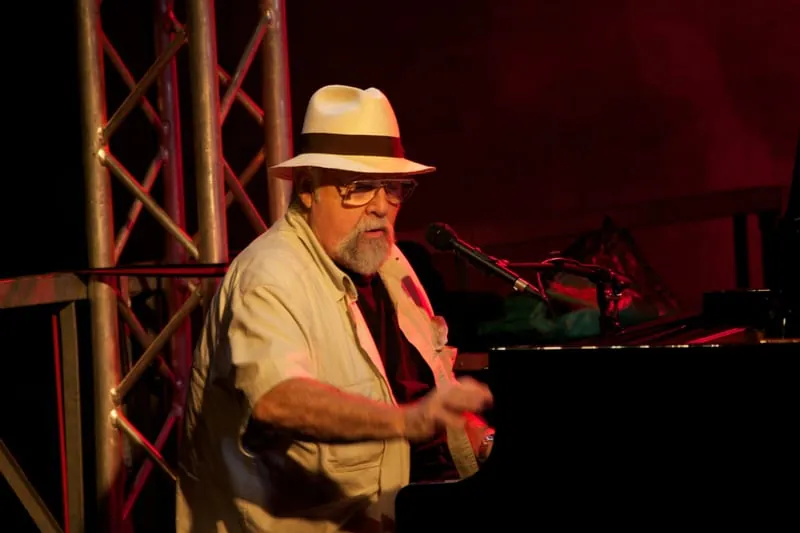
Juan Carlos Cáceres
Juan Carlos Cáceres (1936–2015) was a pianist, trombonist, vocalist, and composer born in Buenos Aires. Though he studied fine arts, he became a fixture in the city's jazz scene before relocating to Paris in 1968. In France, he delved deeply into the music of the Río de la Plata, becoming a passionate advocate for the African roots of tango. This conviction, exploring the connections between tango, milonga, candombe, and murga, became the central theme of his musical life and earned him the nickname "Le Lion" (The Lion).
Cáceres’s sound is a world away from the orchestral Golden Age. His music is a raw, percussive, and deeply personal fusion, blending the foundational rhythms of candombe and murga with the harmonic language of jazz and the storytelling grit of tango. The piano often drives the rhythm with a strong, sometimes sparse, feel, while his gravelly, knowing voice delivers lyrics that are both poetic and direct. Rather than the polished violins and structured bandoneón phrases of a typical orquesta, you hear a more elemental, street-level energy that insists on the Black origins of the music he championed.
As a vocalist, Cáceres’s own voice is the defining instrument on his recordings. The songs in this collection, all from 2003, capture his mature style, where he sings with a conversational and slightly raspy tone that feels both world-weary and defiant. On tracks like the insistent "Toca Tango" and the foundational anthem "Tango Negro," his delivery is rhythmic and declamatory, using his voice to drive the percussive feel of the music. In the milonga "Dársena Sur," his performance is more narrative, painting a vivid picture of the port-side neighborhood with a sense of lived-in authenticity.
At milongas today, Juan Carlos Cáceres is not for a traditional tanda. His music is a powerful statement, best suited for alternative milongas, cortinas, or special moments when a DJ wants to challenge the floor and connect dancers to the deeper, African-diasporic roots of the music. A track like "Tango Negro" can be a profound and educational interlude, its explicit candombe rhythm offering a different kind of movement and feeling. While not standard dance music, his work provides a crucial context and a sound that is essential to a complete understanding of tango's history and soul.
El Cachivache Quinteto
El Cachivache Quinteto (founded 2008) is a Buenos Aires-based group fronted by guitarist Vito Venturino and pianist Pablo Montanelli. The two Argentinian musicians, who had backgrounds in rock, jazz, and blues, formed the ensemble in Spain before resettling in Buenos Aires to reconnect with their porteño roots. They quickly gained a following in Europe and Asia for their high-energy, contemporary take on tango. The group tours relentlessly, managing their own recordings and playing hundreds of shows across dozens of countries, while also holding down a popular weekly milonga in Palermo, Buenos Aires. They have embraced the label "Tango Punk," reflecting both their modern, sometimes irreverent aesthetic and their deep connection to the dance floor.
The sound is immediately recognizable for its driving, danceable energy and modern instrumentation, often featuring an electric guitar taking the melodic lead where a violin or bandoneón might traditionally be. While their arrangements are creative and original, they are built on a solid, rhythmic foundation that keeps dancers moving. The group's punk and rock influences are audible in the music's raw power and vigorous attack, a sound they balance with a dose of humor and a clear love for classic tango structures. This fusion creates a sound that is both visceral and authentic, appealing to fans of traditional tango while pushing the genre's boundaries.
While this library's selections like "A la Gran Muñeca" and "Tanguera" are instrumental, the quintet's lineup is fluid and has at times featured guest vocalists. The core of the group's identity, however, lies in its instrumental force, with Venturino on guitar, Adriano De Vita on bandoneón, Pacha Mendes on double bass, and Andy Ferrari on piano forming a recent and powerful configuration. Their independently produced albums, such as the "Tango Punk" volumes, showcase a mix of original compositions and fresh arrangements of classics. The recordings here, spanning from 2014's driving "Ella Es Así" to 2020's powerful "Oigo Tu Voz," capture the quintet's consistent focus on creating propulsive, instrumental tango for a modern audience.
At milongas today, El Cachivache Quinteto is a go-to for DJs looking to inject a shot of adrenaline into the room. Their music is perfect for later in the evening when the energy is high, offering a contemporary alternative to the more traditional orchestras. A tanda of their work is guaranteed to fill the floor with dancers ready for a strong, playful, and rhythmically intense set. Tracks like the milonga "Ella Es Así" or the powerful tango "El Amanecer" are staples that signal a shift in mood, inviting a dynamic and grounded dance.
Color Tango
Color Tango (founded 1989) is the creation of bandoneonist, arranger, and director Roberto Álvarez (1940–2023). Born in Chacabuco, a town in the province of Buenos Aires, Álvarez began his musical studies early and was playing in a local orchestra by age fourteen. His defining professional experience began in 1978 when he joined the orchestra of Osvaldo Pugliese, eventually becoming the lead bandoneon and a key arranger for eleven years. In 1989, seeking to preserve and extend the powerful aesthetic he had absorbed, Álvarez formed Color Tango with other musicians, many also from Pugliese's orchestra. The group debuted in the Netherlands in 1990 and quickly established itself as the foremost modern interpreter of the Pugliese style.
The sound of Color Tango is a direct inheritance from Osvaldo Pugliese, characterized by its immense rhythmic power and dramatic tension. A dancer immediately feels the signature heavy, walking four-beat marcato that Pugliese called the "yumba," a foundation that gives the music its unstoppable forward momentum. The bandoneon section is the roaring heart of the orchestra, playing with a collective force that is both percussive and deeply expressive. Like Pugliese, Álvarez uses dramatic pauses, sharp dynamic shifts, and rubato to build suspense and emotional weight. While the core style is unmistakable, Color Tango's recordings often have a modern clarity and polish, a high-fidelity continuation of the master's sound rather than a simple imitation.
This library's collection is entirely instrumental, reflecting the orchestra's primary focus on the intricate power of the ensemble itself. The recordings span more than two decades, showcasing a remarkable consistency in their dedication to the Pugliese tradition. Early tracks like the definitive versions of Pugliese's own compositions "La Yumba" and "Malandraca" (recorded here in 1998 and 2003, respectively) are foundational. Later recordings, such as the Astor Piazzolla piece "Zum" or the classic "A Evaristo Carriego" (both from 2020), demonstrate the orchestra's ability to apply its distinctive stylistic lens to a broader repertoire, infusing every piece with its characteristic weight and drama. Though founder Roberto Álvarez retired from the stage in 2021, the orchestra continues under the leadership of his long-time musicians.
At milongas today, a tanda of Color Tango is an event. It's not music for casual chatting or tentative first steps; it's a call for focused, grounded, and passionate dancing. A DJ will typically play Color Tango later in the evening, when the energy on the floor is high and the dancers are ready for a challenge. The orchestra's powerful rhythm and dramatic arrangements demand a strong connection and a deep understanding of the music's push and pull. DJs frequently turn to their driving interpretations of Pugliese classics like "La Yumba" or the rhythmically complex "Mala Junta" to create a moment of intense, electrifying energy that defines the peak of a great milonga.
Hugo Díaz
Hugo Díaz (1927–1977) was a harmonica virtuoso from Santiago del Estero, a province far from the tango salons of Buenos Aires. His real name was Víctor Hugo Díaz, and his musical life began in folklore, the music of his homeland. An accident temporarily blinded him as a child, and his parents gave him a harmonica to pass the time; by the time his sight was restored, he was a prodigy. He arrived in Buenos Aires in the mid-1940s as a folklore musician, but his immense talent also led him to jazz, playing with figures like Louis Armstrong and Oscar Peterson. It wasn't until the early 1970s that he began to seriously record tango, bringing a lifetime of diverse musical experience to the genre.
The sound is immediately surprising. Where you expect the mournful swell of a bandoneón, you hear the clear, agile voice of the harmonica. Díaz doesn't just play the melody; he phrases with the breath and soul of a tango singer, full of emotion and subtle timing. The accompaniment is typically a guitar, bass, and percussion, giving the music a lighter, more folkloric, or even jazz-inflected feel compared to the dense drive of a full orquesta típica. Some listeners hear a mood similar to the work of Astor Piazzolla, another innovator with a jazz background. The result is intimate and melodic, recasting familiar tangos into something new while respecting their core feeling.
All the recordings in this collection are instrumental, which was Díaz's signature approach to tango. The harmonica becomes the vocalist, and it's fascinating to hear it interpret melodies originally written for the human voice. In a piece like "Malena" or the vals "La Pulpera de Santa Lucía," Díaz's harmonica sings the lyrical line with a fluid, expressive power. He captures the portamento and emotional inflections of a singer, proving that the humble harmonica could be a profound vehicle for tango expression. His self-penned "Milonga para una Armónica" is a perfect demonstration of his concept: a piece built entirely around the unique capabilities of his instrument.
At milongas today, Hugo Díaz is a special taste, rarely used for a full tanda. The unique instrumentation can be challenging for traditional dancers, and the sound is more suited for listening or as a cortina. However, a creative DJ might occasionally play one of his rhythmic milongas, like the playful "Taquito Militar" or the classic "El Llorón," to add a moment of surprise and lightness to the evening. His music serves as a beautiful reminder of the sheer breadth of tango and the many different instruments that have fallen in love with its language.
Hyperion Ensemble
Hyperion Ensemble (founded 1992) is one of Europe's most enduring tango orchestras, born from a collective of Italian musicians initially interested in contemporary classical music and the repertoire of Astor Piazzolla. Founded by flutist Bruno Fiorentini, the group quickly dedicated itself to tango, evolving from Piazzolla's concert-hall sound to the traditional, dance-focused music of the Golden Age. Over three decades, they have become a pillar of the European festival circuit, known for their extensive touring and collaborations with a rotating cast of renowned Argentine bandoneonists and singers, bringing a live orchestra experience to milongas from Istanbul to London.
The sound of Hyperion is a modern, high-fidelity tribute to the classic dance orchestras of the 1940s. Their arrangements are clean, powerful, and built for the floor, with a rhythmic clarity that feels both propulsive and comfortable. Unlike the rawer, more aggressive drive of an orchestra like Juan D'Arienzo's, Hyperion offers a fuller, more polished sound, often incorporating flute and guitar, which were common in early tango but less so in the typical Golden Age setup. This gives their interpretations a slightly different color, creating a sound that is robust and rhythmically precise, perfect for driving a milonga without overwhelming it.
The ensemble has a long history of featuring excellent vocalists, and the recordings from 2012 to 2016 prominently feature the Argentine singer Rubén Peloni. His voice is melodic and expressive, well-suited to the orchestra's dynamic but controlled style. In tracks like the dramatic "Fueron Tres Años" or the yearning "Te Aconsejo Que Me Olvides," Peloni's interpretations integrate smoothly with the ensemble, serving the song and the dancer without pulling focus from the rhythm. This partnership is a key part of Hyperion's identity in this period, capturing the energy of their live festival performances where music and dance are in constant dialogue.
At milongas today, a Hyperion Ensemble tanda is a reliable way to fill the floor with vibrant, positive energy. Their music is straightforwardly danceable and feels familiar, making it an excellent choice for the middle of the evening when the energy is high. DJs often turn to their instrumental tracks for a powerful, rhythmic set, with classics like the driving "Café Domínguez" or the sharp, staccato milonga "La Milonga de Mis Tiempos" guaranteed to get everyone moving. Their recordings carry the excitement of a live performance, making them a staple for bringing a festival atmosphere to any dance floor.
La Juan D'Arienzo
La Juan D'Arienzo (founded 2012) is a contemporary orchestra from Buenos Aires dedicated to the style of the legendary conductor Juan D'Arienzo, "El Rey del Compás" or "The King of the Rhythm". The ensemble was formed by young, talented musicians with the express purpose of recreating the vibrant, energetic sound that drove dancers to the floor in the golden age. The orchestra is led by first bandoneonist Facundo Lázzari, whose own grandfather, Carlos Lázzari, was the first bandoneonist and an arranger for the original D'Arienzo orchestra from 1950 until the leader's death in 1976. This direct lineage informs the group's powerful connection to the classic D'Arienzo sound.
True to its inspiration, the sound of La Juan D'Arienzo is pure, driving rhythm. The orchestra delivers the signature D'Arienzo marcato in 4/4 time with a nervous, vibrant energy that is impossible to ignore. The piano and violins often take on a percussive role, emphasizing the strong, staccato beat that leaves little room for melancholy or extended pauses. This is music built for the social dancer's feet, a return to the roots of tango as a dance music first and foremost. Where an orchestra like Carlos Di Sarli creates space and elegance, La Juan D'Arienzo fills the space with a propulsive force that demands movement and a decisive walk across the floor.
The orchestra's primary vocalist, represented well in this collection, is Fernando Rodas. His voice carries the necessary punch and character to ride atop the powerful rhythm section without getting lost, a crucial element in the D'Arienzo style where the singer functions more like another instrument in the ensemble. His recordings here span nearly a decade, from early tracks like "Canzoneta" and "La Última Copa" to more recent work like "Paciencia" and "El Pañuelito Verde." Martín Piñol also appears on the driving "Milonga del 83." The instrumentalists, a full eleven-piece orchestra, capture the fire of the original, with a tight bandoneón section and soaring violins that make classic instrumentals like "Gallo Ciego" and "El Internado" feel fresh and vital.
At milongas today, La Juan D'Arienzo is a DJ's secret weapon for raising the energy in the room. Their music is not a subtle invitation to the floor; it's a powerful summons. A tanda of their tangos is guaranteed to get people moving with speed and force, often played later in the evening when the dancers are warmed up and ready for a challenge. For a DJ looking to inject a shot of adrenaline, instrumentals like "9 de Julio" or the classic "La Cumparsita" are go-to choices that deliver the unmistakable, heart-pounding rhythm of the King.
Orquesta Típica Misteriosa Buenos Aires
Orquesta Típica Misteriosa Buenos Aires (founded 2008) was born from the vision of pianist, composer, and director Javier Arias. After his previous project, Orquesta Típica Fervor de Buenos Aires, dissolved, Arias formed this new orchestra to create a modern, danceable tango sound while honoring the traditions of the 1940s. The group quickly became a staple in the milongas of Buenos Aires and a touring force in Europe and the Americas, known for its commitment to both classic repertoire and new compositions. Their aim has always been to bridge the gap between music for dancers and music for listeners, creating a rich, layered experience that serves both.
The orchestra’s sound is deeply rooted in the melodic, romantic style of Carlos Di Sarli, a foundation laid during Arias's time with his earlier orchestra. However, Misteriosa Buenos Aires builds on that base with a contemporary energy and its own distinct character. Dancers will immediately recognize a lush, string-driven sound with a clear, steady rhythm that is perfect for the dance floor. While the Di Sarli influence provides a familiar, elegant walking beat, the orchestra's original arrangements and compositions, like the instrumental "E.G.B.", introduce modern harmonies and a fresh dynamic intensity. They maintain the structure of a classic orchestra típica, with a full line-up of bandoneons, violins, piano, and double bass, giving them a powerful and nuanced sound.
The orchestra has a rich history of collaboration, but their partnership with vocalist Eliana Sosa, who joined in 2012, has been particularly defining. Sosa’s voice blends seamlessly with the orchestra's style, capable of conveying both the classic drama and a contemporary sensibility. This is beautifully showcased in recordings like the heartfelt vals "Vida Mía" and the emotionally charged tango "Fuimos," where her phrasing and the orchestral arrangement work together to create a complete narrative. Her presence is integral to many of the orchestra's most beloved recordings, including the powerful "Yo No Sé Qué Me Han Hecho Tus Ojos," demonstrating a perfect synergy between singer and musicians.
At milongas today, Orquesta Típica Misteriosa Buenos Aires is a go-to for DJs looking to play a contemporary orchestra that feels classic and is eminently danceable. Their music works beautifully in the first half of the milonga, offering a sound that is both familiar enough for traditional dancers and fresh enough to energize the room. A tanda of their instrumental classics like "9 de Julio" or "El Marne" provides a solid, elegant foundation for dancing. For a later, more dramatic vocal set, a DJ will often turn to their recordings with Sosa, with "Fuimos" being a frequent and powerful choice to bring passion and intensity to the floor.
Los Reyes del Tango
Los Reyes del Tango (founded 1992) is a Buenos Aires orchestra created by bassist and director Ricardo Sánchez Rivera to champion the classic, driving style of Juan D'Arienzo. Formed by musicians who had played in some of the great tango orchestras, the ensemble was a deliberate effort to keep the sound of the 1940s and '50s alive on the dance floor. From its inception, the group dedicated itself to recreating the energetic, rhythmic pulse that earned D'Arienzo the nickname "El Rey del Compás" (The King of the Beat), becoming a staple at milongas and festivals in Argentina and around the world.
True to its inspiration, the sound of Los Reyes del Tango is pure, propulsive rhythm. The orchestra delivers a strong, marcato 2x4 beat, with the piano providing a percussive foundation that drives the music relentlessly forward. The bandoneons play with a sharp, staccato attack, while the violins often carry the melody with a nervous energy, mirroring the classic D'Arienzo sound that brought dancers flooding back to the milongas in the mid-1930s. Unlike the smoother, more lyrical orchestras, there is little room for rubato or sentimentality here; the focus is entirely on the beat, creating a sound that is immediately recognizable and irresistibly danceable.
The recordings in this collection, from 2005 to 2008, are entirely instrumental, highlighting the orchestra's powerful rhythmic core. This focus on the dance beat is central to the D'Arienzo tradition they uphold. In instrumental pieces, the orchestra's tight ensemble work comes to the forefront, with each section contributing to the driving energy. Titles like "El Huracán" and "La Puñalada" showcase their ability to build intensity, while classics like "Canaro en París" and "El Choclo" are rendered with the crisp articulation and forward momentum that dancers expect from this style.
At milongas today, a tanda of Los Reyes del Tango is an injection of pure energy. DJs use this orchestra to lift the mood and pack the floor, often placing them later in the evening when dancers are warmed up and ready for a powerful, rhythmic set. Their music is straightforward and clear, making it a reliable choice for dancers of all levels who want to connect with the driving pulse of the tango. A DJ will often reach for a classic like "Este Es El Rey" or the urgent milonga "La Puñalada" to guarantee a dynamic and exciting tanda.
Romántica Milonguera
La Romántica Milonguera (founded 2016) was created in Buenos Aires by co-directors Tomás Regolo (piano) and Lucas Furno (violin) with a clear mission: to bring tango back to a popular, everyday place in Argentine life. They saw that the genre had become largely a product for export or a relic of the past, and they wanted to recapture the spirit of the golden age for contemporary dancers and listeners. The orchestra burst into global view in 2017 when their video clips for the tangos “Poema” and “Invierno” went viral on YouTube, quickly gathering millions of views and establishing them as a major force in the modern tango world.
The sound of Romántica Milonguera is lush, powerful, and unabashedly emotional. They craft their arrangements to be immediately danceable, with steady tempos and a clear, driving rhythm that carries dancers through the phrase. Unlike more restrained contemporary groups, Romántica’s style is often described as “super-charged” and “maximally exposed,” taking every melodic and rhythmic possibility to its expressive peak. The result is a sound that is both a tribute to the 1940s and entirely its own — full, romantic, and with a relentless energy that can feel like it’s about to jump off a cliff. This approach gives their versions of classic tangos a fresh, cinematic quality.
The orchestra is defined by its strong vocalists, who bring a passionate, often dramatic flair to the music. The most consistent male voice is Roberto Minondi, whose heartfelt interpretations are featured on recordings across their career, including the vals “Paisaje” and the tango “Fueron Tres Años.” Marisol Martínez was a key voice in their early success, lending her expressive power to tracks like “Mi Serenata” and the orchestra’s breakout version of “Poema.” The roster is rounded out by the distinctive contributions of singers like Ximena Giménez on songs such as “Pobre Flor,” and Hache de Huilén and Huilén Curra, who bring a vibrant energy to the milonga “Siga el Baile.”
At milongas today, a tanda of Romántica Milonguera is an injection of pure, high-octane energy. DJs know that this is not background music; it demands attention and commands the dance floor. While their style might be too intense for the quietest moments of the night, it’s a perfect tool for a DJ looking to raise the temperature and create a memorable, dramatic peak. You’ll often hear their music later in the evening, when the energy is high and dancers are ready for something big. A DJ might reach for the driving rhythm of “Bomboncito” or the sweeping drama of “Poema” to give the room a powerful emotional lift.
Orquesta Típica Sans Souci
Orquesta Típica Sans Souci (founded 1998) was formed in Buenos Aires with a clear and ambitious mission: to faithfully recreate the sound of two celebrated Golden Age orchestras, those of Miguel Caló and his brilliant pianist, Osmar Maderna. Rather than composing new material, the ensemble's musicians dedicated themselves to transcribing the classic 1940s arrangements directly from the original recordings, preserving every nuance. The orchestra maintains the grand instrumentation of the era, featuring a full string section of four violins, a powerful four-person bandoneón line, and the essential rhythm section of piano and double bass. This commitment to authenticity has made them a vital presence in the contemporary tango scene, both in the milongas of Buenos Aires and on international tours.
The sound of Sans Souci is a direct portal to the 1940s. By meticulously studying and reproducing the arrangements of Caló and Maderna, they capture the elegant, rhythmic, and deeply danceable quality that defined that decade. A listener immediately hears the polished, marcato drive characteristic of Caló, with the piano often taking a prominent, melodic role, a clear homage to Maderna's influential style. The violins carry lush, sweeping melodies, while the bandoneóns provide both rhythmic punch and soulful phrasing. Their recordings are not modern interpretations but high-fidelity re-creations, aiming to feel as if you are hearing the original orchestras performing live, with all the precision and passion intact.
This library’s collection from their 2020 album, "Porteñísimo," showcases their work with two of the most respected contemporary tango singers. Walter "Chino" Laborde, a powerful and expressive voice, is featured on tracks like "Ausencia," bringing a dramatic weight that honors the Golden Age tradition. Emiliano Castignola lends his voice to "Trenzas," demonstrating the orchestra's ability to partner with singers to create a cohesive and emotionally resonant performance. The instrumental pieces in this collection, such as the title track "Sans Souci" and the energetic "Porteñísimo," highlight the orchestra's tight ensemble playing and deep understanding of the stylistic details that make this music so compelling for dancers.
At milongas today, Orquesta Típica Sans Souci is a gift to both dancers and DJs. Their music provides the sound and feeling of the classic 1940s orchestras but with the clarity and quality of modern recordings. A tanda of Sans Souci is perfect for the heart of the evening, offering a sophisticated, rhythmic drive that fills the floor. DJs often turn to their recordings to build energy with a reliable, elegant, and eminently danceable set. Tracks like their namesake instrumental, "Sans Souci," or the driving "Tierra Querida" are excellent choices for a tanda that feels both classic and vibrantly alive.
Sexteto Cristal
Sexteto Cristal (active 2019) is a contemporary tango ensemble based in Hamburg and Berlin, Germany, dedicated to recreating the danceable sounds of the Golden Age. Founded by musicians passionate about the classic repertoire, the group's mission is to interpret the masterworks with the melodic phrasing, dramatic articulation, and powerful rhythm that characterized the great historical orchestras. Their lineup features a classic sexteto structure of two bandoneons, two violins, piano, and double bass, allowing them to explore the textures of different classic styles while maintaining their own clear, modern recording quality.
The sound of Sexteto Cristal is crafted with the dancer's experience as the highest priority, avoiding excessive virtuosity in favor of a clear, steady beat. While the initial prompt compared them to Di Sarli, their repertoire actually shows a versatile command of multiple styles, from the rhythmic drive of D'Arienzo to the lyrical elegance of Pugliese. The arrangements are faithful to the originals but shine with a pristine, modern sound quality that makes them immediately accessible. The interplay between the precise violins and the rich bandoneon section creates a sound that is both warm and rhythmically charged, perfect for navigating a crowded dance floor.
The ensemble collaborates with several accomplished vocalists, and the recordings in this library feature the Argentine singer Guillermo Rozenthuler. His voice integrates into the orchestra as another instrument, never dominating the arrangement but adding a layer of lyrical depth. This partnership is evident on romantic tangos like "Dos Fracasos" and the dramatic "Ríe Payaso." The sextet also excels at purely instrumental pieces, delivering crisp, energetic renditions of classics like the playful vals "Lágrimas y Sonrisas" and the powerful opener "El Amanecer."
At milongas today, Sexteto Cristal provides a refreshing and reliable alternative to Golden Age recordings. DJs reach for their music when they want a traditional sound with a high-fidelity, modern clarity that fills the room. A tanda of their work sits well alongside the classics, offering a familiar feel without the audio limitations of older recordings. Their milongas are particularly popular; tracks like "La Vida Es Una Milonga" and "La Milonga Que Hacía Falta" have a superb drive and rhythmic kick that are guaranteed to lift the energy of the floor.
Sexteto Milonguero
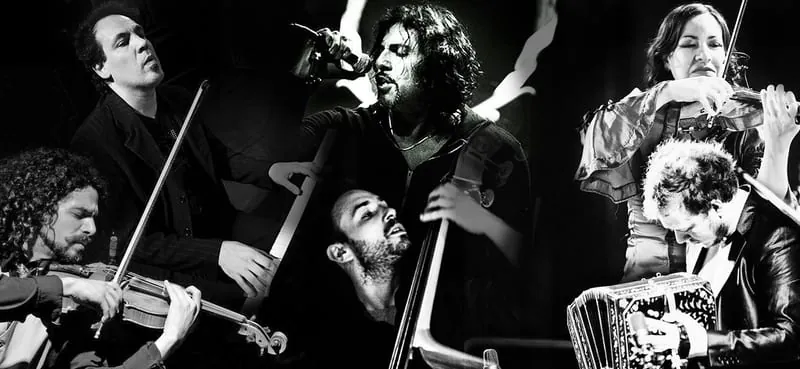
Sexteto Milonguero (founded 2006) was formed in Buenos Aires by singer Javier Di Ciriaco with the express purpose of playing for dancers. The group's founding members came from diverse musical backgrounds, including jazz, classical, and even rock, but shared a goal: to revive the dance-focused energy of the 1940s Golden Age orchestras. They quickly recorded their first album, "Pa' que Bailen" ("So That You Dance"), and began playing in the milongas of Buenos Aires. Their immediate popularity with local and visiting dancers led to international tours, establishing them as one of the most recognized contemporary tango orchestras worldwide.
The sound of Sexteto Milonguero is powerful, energetic, and unapologetically rhythmic, built from the ground up for the social dance floor. Their primary inspiration is the driving beat of the 1940s, and while they don't copy any single orchestra, their propulsive energy often draws comparisons to Juan D'Arienzo. However, the ensemble brings a modern clarity and a distinct, sometimes slightly jazzy, swing to their interpretations. The arrangements feature a robust rhythmic foundation from the piano and bass, with sharp, marcato phrasing from the bandoneons and violins that gives dancers a clear and compelling beat to follow. This combination creates a sound that is both a faithful homage to the Golden Age and unmistakably contemporary.
Across this library's recordings, the orchestra's charismatic frontman and founder, Javier Di Ciriaco, is the sole vocalist. His clear, expressive tenor voice is a defining element of the group's identity, perfectly suited to their high-energy style. Rather than floating over the top, Di Ciriaco's vocals integrate into the rhythmic drive of the orchestra, becoming another percussive and emotional layer. This is evident in early recordings like the urgent milonga "Tres Esquinas" and continues through powerful tangos like "Embrujamiento" and "Oigo Tu Voz." Even in later recordings such as the dramatic "Llorar por una mujer," his voice remains a central force, riding the wave of the music to propel the dancers across the floor.
At milongas today, a tanda of Sexteto Milonguero is an injection of pure energy that can lift a room and fill the floor. DJs often play them during the energetic peak of the evening, knowing the orchestra's driving rhythm is irresistible to dancers. Their music is not for quiet contemplation; it demands attention and a strong, grounded connection between partners. A classic choice is the sharp and playful milonga "Café Domínguez," which is guaranteed to get feet moving. For a powerful tango tanda, a DJ might reach for the dramatic build of "Ella Es Así" or the insistent beat of "Guapeando," confident that Sexteto Milonguero will deliver a thrilling ride.
Solo Tango Orquesta
Solo Tango Orquesta (founded 2010) is a Moscow-based ensemble that quickly earned international acclaim for its powerful and polished interpretations of tango classics. Founded in the summer of 2010, the group of conservatory-trained musicians almost immediately began touring the world's major tango festivals. They became the first European orchestra to be nominated for the prestigious Premios Tango in Buenos Aires, receiving nominations in both 2018 and 2019. That same year, their arrangement of "Los Mareados" was used by the winning couple in the Tango Escenario category at the Mundial de Tango, a first for a European orchestra.
The orchestra's sound is defined by its technical precision, high energy, and deep respect for the dance floor. Dancers will hear a clean, modern sound with a strong rhythmic drive, often reminiscent of the late-period work of Juan D'Arienzo, but with a clarity and dynamic range that is entirely contemporary. While they possess the virtuosity for any concert hall, their focus remains squarely on creating danceable music. Their arrangements are sophisticated yet intuitive, balancing complex musical ideas with the steady, reliable pulse that dancers crave, making their sound accessible even to those unfamiliar with classic tango.
This library's collection focuses on the orchestra's instrumental work, showcasing the core quartet that has defined its sound. The lineup features Alexander Ryazanov on violin, Marat Mansyrev on piano, Ilya Alpeev on double bass, and Pavel Ratynsky on bandoneon. The recordings here span a significant period of their career, from early tracks like "La Cumparsita" (2012) to more recent explorations. You can hear their dynamic approach in the driving rhythm of milongas like "El Puntazo" or the dramatic sweep of tangos like "Recuerdo" and "Gallo Ciego". While the orchestra frequently collaborates with vocalists like Chino Laborde and others for live performances and specific albums, these recordings celebrate the power and nuance of the instrumental ensemble itself.
At milongas today, a Solo Tango Orquesta tanda is an injection of pure energy. DJs often use their music to lift the mood and fill the floor, placing them in the later part of the evening when dancers are warmed up and ready for something strong and vibrant. Their versions of Golden Age classics are faithful enough to be instantly recognizable, but with a modern punch that sets them apart. A DJ might reach for the sharp, staccato drive of "Gallo Ciego" for a powerful tango tanda or the playful energy of "El Puntazo" for a milonga that is guaranteed to get everyone moving.
Tango Bardo
Tango Bardo (founded 2014) is a contemporary tango quartet from Buenos Aires, born from the city's vibrant milonga circuit. The ensemble was formed by Juan Miguens (double bass), Lucas Furno (violin), Santiago Polimeni (bandoneon), and Lorena Donvito (piano). They quickly became a staple in well-known milongas like La Viruta and Salón Canning, and their reputation grew through their work with major tango dance companies, which took them on extensive international tours. From their first album "Del sur" in 2015, they established themselves as a powerful voice in the modern tango landscape, creating music deeply rooted in tradition but unmistakably for the dancers of today.
The sound of Tango Bardo is immediately recognizable for its sharp, rhythmic drive and potent energy. Their arrangements often feature a strong, driving marcato that gives dancers a clear and forceful beat to step on, reminiscent of the power of D'Arienzo but with a modern edge. The interplay between Santiago Polimeni's incisive bandoneon and Lucas Furno's violin, which can be both lyrical and intensely rhythmic, defines much of their sound. Unlike orchestras that lean heavily on rubato and complex melodic lines, Tango Bardo's focus is on a direct, propulsive rhythm that makes their music exceptionally danceable and a favorite for fast, energetic floorcraft.
While many of their most popular tracks are instrumentals, Tango Bardo has a significant collaboration with vocalist Roberto Minondi, known for his work with Orquesta Romántica Milonguera. This partnership, showcased on their 2021 album "Con Roberto Minondi," brings a lyrical and emotional depth to their powerful sound. Minondi's clear, expressive voice rides perfectly over the quartet's rhythmic base, never getting lost in the intensity. In recordings like "Paciencia" and "Sin Palabras," the ensemble creates a supportive space for the vocals while maintaining their signature drive, offering a contemporary take on the classic orchestra-and-singer dynamic.
At milongas today, a tanda of Tango Bardo is an injection of pure energy. DJs often use their music to lift the mood and get the ronda moving with serious purpose. Their driving rhythm is perfect for the middle of the night when dancers are warmed up and ready for a challenge. For a guaranteed floor-filler, a DJ will often turn to their powerful instrumentals; tracks like the relentless "El Huracán" or the sharp, accented "Quejas de Bandoneón" are sure to inspire dynamic, rhythmic dancing from the first note to the last.
Trio Garufa
Trio Garufa (founded 2001) is a San Francisco-based international ensemble dedicated to authentic Argentine tango music. The group was formed when Argentine guitarist Guillermo García was asked to provide live music for a local milonga. He teamed up with Swiss-born Adrian Jost on bandoneon and a string of bassists, with Sascha Jacobsen from California solidifying the lineup in 2005. The name comes from a Lunfardo term for a party animal or a spree, reflecting the fun, upbeat spirit of their music. They quickly became a fixture in the Bay Area tango scene and are notable for being one of the only US-based ensembles to have performed extensively in the milongas of Buenos Aires.
The sound of Trio Garufa is energetic and virtuosic, yet always rooted in the dance. Their tight, rhythmic arrangements for guitar, bandoneon, and string bass can produce a sound as full and driving as a large orchestra. One anecdote tells of a DJ in Buenos Aires rushing to his laptop, thinking he'd left a D'Arienzo recording playing, only to find it was the live trio. While they draw heavily from the golden age, their influences also include modern masters like Astor Piazzolla and Horacio Salgán, and they even venture into electro-tango. The result is a sound that feels both classic and contemporary, powerful enough for a concert hall but made for the dance floor.
As an instrumental group, the interplay between the three musicians is the central focus. The library's selections span their first decade, showcasing their evolving chemistry and repertoire. Early recordings like "Campo Afuera" and "Desde el Alma" from their 2004 debut album, *Tango en el Mate*, capture their fresh, danceable approach to classic tangos, valses, and milongas. By 2008's *La Segunda Tradición*, documented on tracks like the driving "Danzarín" and the lyrical vals "Quiero Ser Tu Sombra," the trio's signature powerful and polished sound is fully formed. The inclusion of later pieces like "El Torito" (2012) shows their continued dedication to crisp, exciting interpretations of the classics.
At milongas today, Trio Garufa provides a burst of high-energy, impeccably danceable music. Their sound has the drive and clarity that dancers love, making them a great fit for the middle of the evening when the energy is high. A DJ might play a tanda of their milongas, like "Milonga de Mis Amores," to get the floor moving with speed and precision. For a powerful tango set, a track like "Paciencia" delivers the rhythmic punch of the golden age masters but with a clean, modern recording quality that fills the room.
La Tubatango
La Tubatango (founded 2005) is a contemporary quartet that channels the spirit of a unique earlier group, Los Tubatango. The original ensemble was created in 1967 by bandoneonist Guillermo Inchausty, who had the novel idea of replacing the traditional double bass with a tuba. His goal was to move away from the complex orchestrations of the day and recapture the festive, picaresque feel of tango's early years, when music was played in courtyards and on the street. The modern La Tubatango was formed in the mid-2000s as a tribute to and continuation of this project, bringing the distinctive tuba-driven sound to a new generation of dancers.
The sound is immediately recognizable and charmingly different from a standard orquesta típica. Where you expect the percussive slap of a string bass, you hear the warm, bouncy pulse of the tuba, grounding the music with a sound that feels more like a celebratory park band than a dramatic concert hall orchestra. The modern lineup features the tuba alongside a bandoneón, guitar, and a clarinet (which replaced the flute used in the original 1960s group). This combination creates a cheerful, relaxed, and highly rhythmic feel that evokes the Guardia Vieja era without being a museum piece; it's a sound that feels both nostalgic and fresh.
The recordings in this collection are all instrumental, showcasing the tight interplay of the modern quartet. The group, led by guitarist and arranger Lucas Kohan, focuses on the core rhythmic and melodic joy of the arrangements. This instrumental focus allows the unique texture of the ensemble to shine through, whether in the crisp, running rhythm of the milonga “Orillera” or the gentle sway of the vals “Corazón de Oro.” While the group sometimes performs with guest vocalists, these recordings capture the pure, instrumental essence of their sound.
At milongas today, a tanda of La Tubatango is a wonderful way to change the mood and lift the energy on the floor. Their music is perfect for a lighthearted, playful dance, and DJs often use it to provide a joyful break from more intense or dramatic Golden Age orchestras. The sound works especially well for afternoon or outdoor milongas. Their milongas are particularly popular; a DJ looking to fill the floor with happy, walking dancers will often reach for the driving rhythm of a piece like “Corralera.”
Top songs
- Sinsabor
- Sinsabor
- La Yumba
- Llorar por una mujer
- La Mariposa