Calo
1941–1963
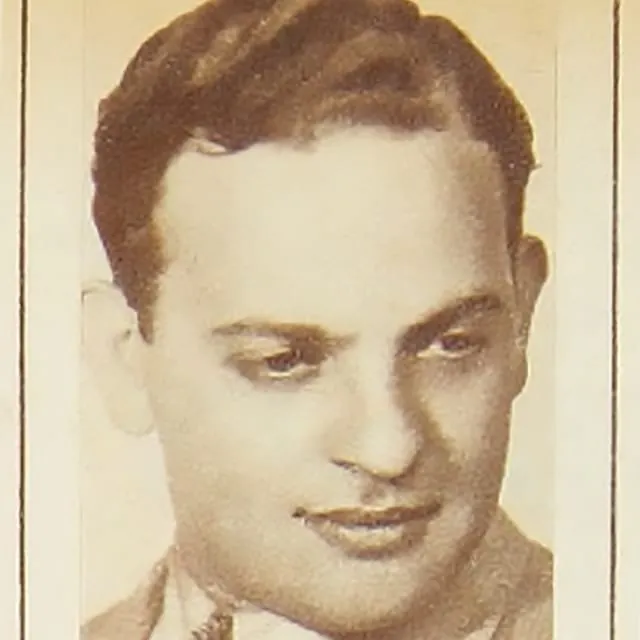
Miguel Caló
Miguel Caló (1907–1972) was born in Buenos Aires and began playing the bandoneón as a child, performing in neighborhood cafés and cinemas as a teenager. After working in several ensembles through the 1930s, he formed his own orchestra in 1934, but it was the reconstituted ensemble of the early 1940s that became legendary — not only for its music but for the extraordinary roster of musicians Caló assembled. His orchestra was effectively an incubator for future bandleaders: pianist Osmar Maderna, bandoneonist Armando Pontier, violinist Enrique Francini, and bassist Domingo Federico all played in Caló's ranks before launching their own celebrated careers.
Caló's orchestral sound is one of the most refined and sophisticated in the Golden Age — lush, romantic, and deeply melodic. Where D'Arienzo and Biagi drove dancers with rhythmic energy, Caló enveloped them in rich harmonic textures and flowing melodic lines. The string section is prominent and expressive, the bandoneóns warm and singing rather than percussive, and the arrangements have a chamber-music quality that reflects the exceptional caliber of his musicians. The rhythm is present but never dominant — it supports rather than drives, making Caló's music ideal for slow, connected, deeply musical dancing. His sound shares Di Sarli's elegance but is darker, more harmonically complex, and more emotionally intense.
His golden period began in 1941 with the arrival of Alberto Podestá, whose warm, natural voice graced early gems like "Bajo un Cielo de Estrellas" and "Percal." Raúl Berón joined shortly after and became the orchestra's most iconic vocalist — his deep, velvety baritone was the perfect match for Caló's lush arrangements, producing a remarkable run of masterpieces through the mid-1940s including "Al Compás del Corazón," "Lejos de Buenos Aires," "Tristezas de la Calle Corrientes," and "Que Te Importa que Te Llore." Jorge Ortiz contributed memorable recordings like "Pa' que Seguir" in 1943, and Raúl Iriarte carried the vocal tradition from 1943 through the late 1940s with beloved tangos like "Nada" and "La Vi Llegar." The instrumentals span the full career and include some of Caló's most atmospheric and harmonically adventurous arrangements.
At milongas, Caló tandas are moments of deep emotional connection — DJs place them where they want the floor to slow down, breathe, and feel. His music is particularly prized by intermediate and advanced dancers who savor melodic phrasing and musical conversation between partners. The Berón recordings are among the most treasured vocal tangos in the entire repertoire, and a well-placed Caló tanda can be the emotional heart of an evening. His music demands less rhythmic precision than D'Arienzo or Biagi but rewards musicality and sensitivity, making it a perfect counterweight to more driving orchestras in a DJ's programming arc.
Top songs
- Pa' Qué Seguir
- Qué Te Importa que Te Llore
- Jamás Retornarás
- A las Siete en el Café
- La Vi Llegar