D'Agostino
1940–1955
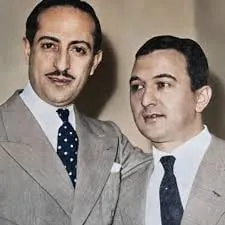
Ángel D'Agostino
Ángel D'Agostino (1900–1991) was born in Buenos Aires and trained as a pianist, playing in various tango ensembles from a young age. He formed his first orchestra in the early 1930s, but the defining chapter of his career began in 1940 when he partnered with singer Ángel Vargas. The two Ángeles formed one of tango's most seamless and beloved collaborations, producing a body of work so unified that they are rarely spoken of separately: to say "D'Agostino" in tango is to say "D'Agostino-Vargas."
The D'Agostino-Vargas style is joyful, uncomplicated, and irresistibly charming. D'Agostino's arrangements are deliberately simple — clean rhythms, bright tempos, minimal dramatic tension — creating a transparent, sunlit sound that lets Vargas's voice shine through completely. Where Troilo created sophisticated layered arrangements and Pugliese built towering dramatic structures, D'Agostino aimed for directness and warmth. The orchestra swings with a lighthearted, almost playful energy, and the overall effect is one of effortless naturalness — music that sounds like friends making music together rather than a formal ensemble performing. Vargas's voice completes this picture perfectly: warm, conversational, slightly rough around the edges, with an ease and charm that make every song feel like a story told over a glass of wine.
The partnership with Ángel Vargas dominated the entire career, spanning from 1940 to 1946 and encompassing the vast majority of the orchestra's recordings. The early recordings — "Muchacho," "No Aflojes," "Tres Esquinas," "Ahora No Me Conoces" — established the duo's identity immediately: bright, rhythmic, and vocally driven. Through the mid-1940s, the repertoire deepened with gems like "Esquinas Porteñas," "Notas De Bandoneón," "El Porteñito," and "Shusheta," each showcasing Vargas's remarkable ability to inhabit a song's character with natural ease. The handful of instrumentals are spirited and rhythmically engaging, though it is the vocal recordings that define this orchestra's legacy. After the partnership with Vargas ended, D'Agostino continued with other singers into the 1950s, but these later recordings never recaptured the magic of the original collaboration.
At milongas, D'Agostino-Vargas tandas bring lightness and joy to the dance floor — they are the musical equivalent of a warm smile. DJs typically program them in the more relaxed, sociable portions of the evening, where their unpretentious charm invites even hesitant dancers onto the floor. The rhythmic clarity and moderate tempos make this music accessible to all levels, while Vargas's vocal personality gives advanced dancers rich material for musical interpretation. "Tres Esquinas," "Esquinas Porteñas," "El Choclo," and "El Porteñito" are among the most beloved tangos in the entire social dance repertoire, and no DJ's collection is complete without a strong D'Agostino-Vargas selection.
Top songs
- Ahora No Me Conocés
- Notas De Bandoneón
- Tres Esquinas
- Muchacho
- Café Domínguez