Demare
1938–1945
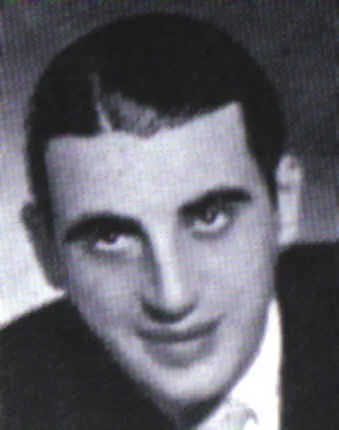
Lucio Demare
Lucio Demare (1906–1974) was born in Buenos Aires and trained as a pianist, becoming one of the finest keyboard artists in tango history. He spent part of the early 1930s in Paris — one of several Argentine tango musicians who performed in the city's fashionable tango venues — absorbing European musical influences that would later color his sophisticated arrangements. Returning to Buenos Aires, he formed his own orchestra in 1938 and began recording for the Odeon label. Demare was equally distinguished as a composer: his "Malena," with lyrics by Homero Manzi, is one of the most famous and frequently performed tangos ever written — a masterpiece that transcends the dance floor.
Demare's orchestral sound is elegant, restrained, and deeply musical — shaped by his conservatory training and his own refined piano playing. His arrangements favor melodic beauty and harmonic sophistication over rhythmic energy, with a slightly contemplative character that sets him apart from more extroverted contemporaries. The piano plays a prominent but never overwhelming role, weaving through the arrangements with taste and subtlety rather than the percussive dominance of a Biagi or D'Arienzo. The strings are warm and expressive, the overall tempos measured, and the dynamic range carefully controlled. Where some orchestras grab dancers with rhythmic force, Demare draws them in with musical intelligence and emotional nuance — his is a quiet authority, closer in temperament to Fresedo's salon elegance than to the popular fire of Rodríguez or Canaro.
Demare's recording career, concentrated between 1938 and 1945, was brief but artistically rich. Juan Carlos Miranda was the first important vocalist, singing with the orchestra from the late 1930s through 1942 and delivering what may be the definitive recording of "Malena" — a performance of such economy and emotional truth that it remains the version against which all others are measured. Miranda also produced the beautiful "Mañana Zarpa un Barco" and "Sorbos Amargos." Raúl Berón arrived in 1943 and brought his remarkable velvety baritone — the same voice that would later define Miguel Caló's orchestra — producing a superb run of recordings including "Una Emoción," "Y Siempre Igual," "Moneda de Cobre," and the gorgeous vals "Al Pasar." Horacio Quintana continued the vocal tradition from late 1944, contributing the powerful "Torrente" among other recordings. The instrumentals, including "Tierra Querida," showcase Demare's piano and his gift for atmospheric arrangement.
At milongas today, Demare occupies a respected niche — not programmed as frequently as the major orchestras, but deeply valued by knowledgeable DJs for moments requiring musical depth and emotional sophistication. "Malena" is one of the most recognized tangos in existence, and a Demare tanda built around the Miranda or Berón recordings can be a deeply satisfying musical experience for the floor. His music is best suited to the more contemplative portions of an evening and appeals particularly to dancers who value melodic phrasing and musical conversation over rhythmic intensity. The compact but high-quality catalogue means every recording carries weight, and the presence of both Berón and Miranda among his vocalists gives DJs access to two of the finest voices of the Golden Age. For dancers and DJs who appreciate musical refinement, Demare is an essential addition to the repertoire.
Top songs
- Malena
- Sorbos Amargos
- Torrente
- Oigo Tu Voz
- La Racha