Gobbi
1948–1955
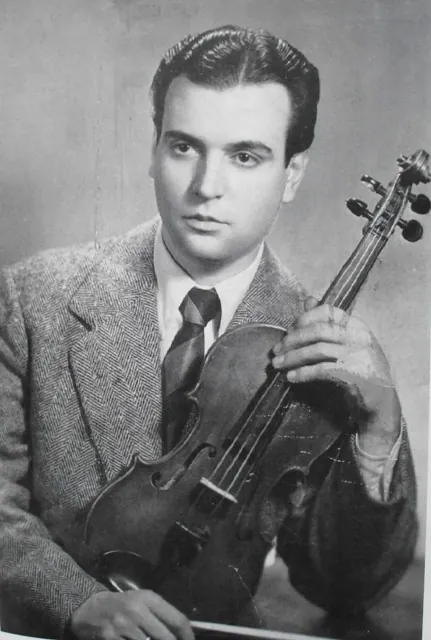
Alfredo Gobbi
Alfredo Gobbi (1912–1965) was born Alfredo Julio Floro Gobbi in Paris, France, to a Chilean mother and a Uruguayan father who were touring as variety artists. The family returned to Buenos Aires before his first birthday, and he grew up in the Villa Ortúzar neighborhood. A gifted violinist from a young age, he worked his way through a series of important orchestras, including those of Juan Maglio, Roberto Firpo, and Pedro Laurenz. In 1942, he formed his own orchestra, which would become the vehicle for his unique vision. Known as "El violín romántico del tango," Gobbi inherited a prestigious artistic name and forged a new path, creating one of the most distinctive sounds of the era.
Gobbi's orchestra has a sound that is immediately recognizable for its dramatic, almost mournful, quality. His style is built around his own violin, played with a characteristic vibrato and expressive phrasing that earned him his nickname. The orchestra often plays at a slower tempo, with a heavy, deliberate marcato and frequent use of rubato, stretching time for emotional effect. This creates a dense, complex, and sometimes tense atmosphere, quite different from the smoother elegance of an orchestra like Carlos Di Sarli's, with whom he is sometimes compared. The piano is the driving force, but the arrangements leave ample space for solos from the violins and bandoneóns, creating a rich, layered texture that rewards careful listening.
While Gobbi recorded with several great singers over his career, including Jorge Maciel and Héctor Coral, his instrumental work stands on its own as a powerful expression of his musical identity. The recordings in this collection are all instrumental, showcasing the orchestra's raw power and Gobbi's innovative arrangements. Pieces like "Orlando Goñi" and "El Andariego" are powerful tributes, while club anthems such as "Independiente Club" and "Racing Club" show a more driving, rhythmic side. His recording career with RCA Victor, from 1947 to 1957, is considered the period where his style is most clearly defined.
At milongas today, a tanda of Alfredo Gobbi is a statement. His music is not for the faint of heart; it demands attention and skilled navigation from the dancers. DJs often place Gobbi later in the evening, when the energy on the floor is high and the dancers are ready for a challenge. The dramatic pauses, shifting rhythms, and deep emotion in his music can create moments of pure tango magic. A track like the driving milonga "Chuzas" or the powerful tango "Camandulaje" can electrify the room and is a go-to for a DJ looking to raise the temperature.
Top songs
- Orlando Goñi
- El Andariego
- Independiente Club
- Camandulaje
- Racing Club